The shower went cold halfway through this morning.
In more detail
There's no single honest number. How long a hot water system lasts depends on its type, your water pressure, the anode, maintenance and how well it was installed.
On a storage tank, the cylinder decides the end. Almost every other part can be replaced.
High pressure without a limiting valve shortens the life of relief valves and tanks alike.
Water through the jacket, rust at the base, brown hot water and repeated faults are the signs it's close.
Replacing on your terms, before it fails, gives you time to choose the right type and check for energy scheme discounts.
Why there's no honest single number
Ask how long a hot water system lasts and you'll hear confident figures. The truth is less tidy. Two identical tanks installed on the same day can finish years apart, one on a gentle-pressure street with a limiting valve and a yearly service, the other on a high-pressure supply with a relief valve that dribbled for a decade and nobody ever looked at. The type of system matters, but the conditions it lives in matter just as much. That's why we'd rather tell you what shortens and lengthens a system's life than pretend there's one answer.
What wears a storage tank out
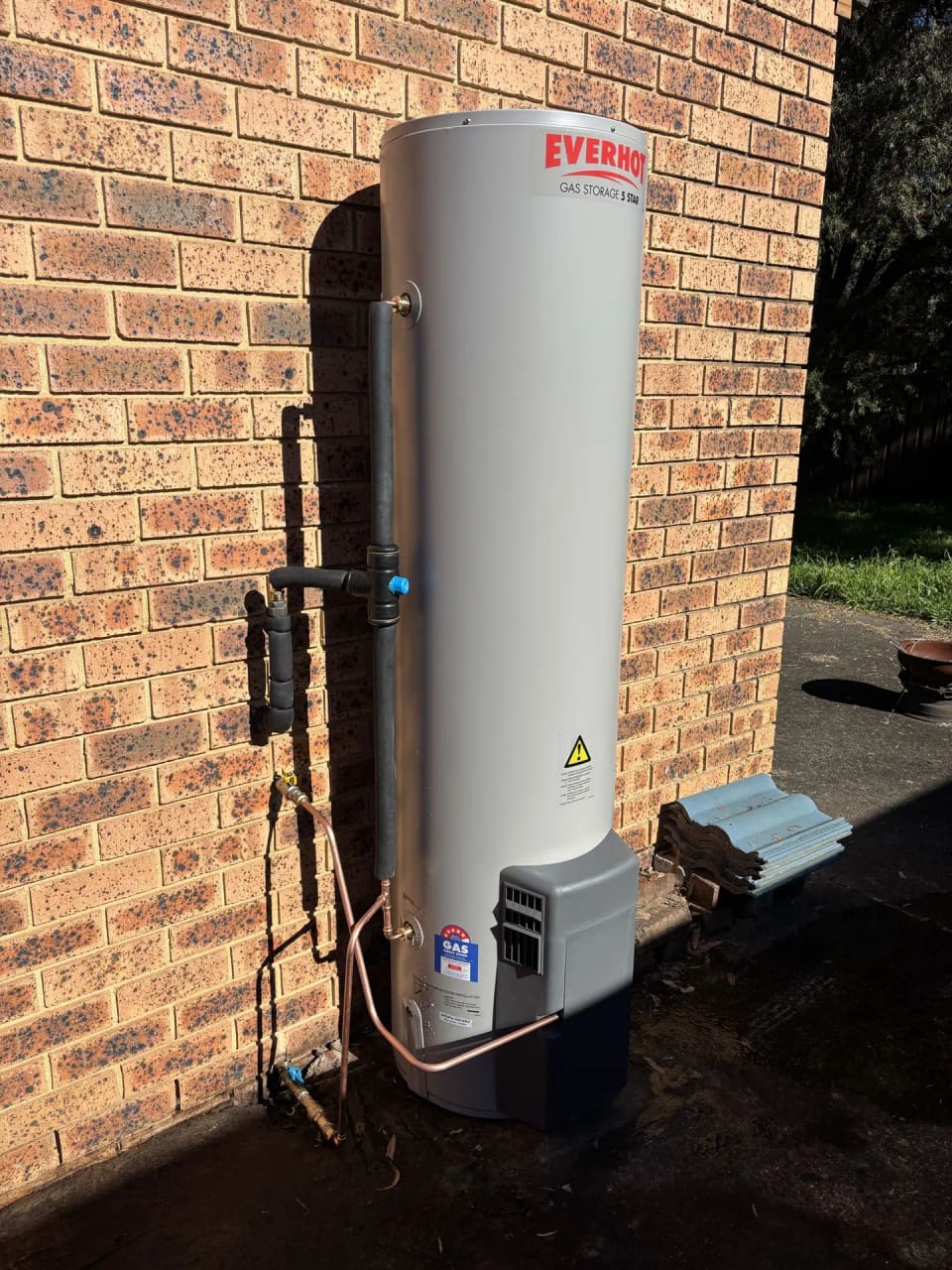
Inside a steel storage tank is a glass lining and a sacrificial anode rod that corrodes so the steel doesn't. When the anode is used up, rust starts on the tank itself and eventually it weeps. Water pressure is the other big factor. Sydney Water says low-lying homes receive higher pressure and that high pressure can break pipes and cause leaks. Building Commission NSW warns that a tank left without a needed pressure limiting valve can lose its relief valve early and eventually spring a leak. Sediment on the tank floor and years of heating cycles add heat stress to the base on top of that.
A plumber answers 24/7. We find the cause and put a fixed price in writing before we start.
Instant units and heat pumps age differently
A continuous-flow unit has no cylinder to rust through. What wears is the electronics, the fan, the igniter, the sensors and the heat exchanger, and a long frosty blackout can crack an exchanger early. A heat pump has a tank that ages like any storage tank, plus a compressor and fan that age like an air conditioner's. For both, a clean installation, clear airflow and regular servicing make a real difference, and Building Commission NSW lists the common heat pump installation faults, from missing limiting valves to tanks on uneven bases, which are worth ruling out on any system you inherit.
What the warranty on your paperwork tells you
The maker's warranty on the cylinder is the length of time they're willing to stand behind the tank. Plenty of tanks outlast it comfortably, and some on hard-working or high-pressure supplies don't reach it. It's a useful guide to what the manufacturer expects, not a date the tank will fail. The rating plate on the side of the unit usually carries a manufacture date, or a serial number the maker can date, if you've lost the paperwork.
Things that genuinely help a system last
A limiting valve on the cold supply if your pressure is high. A yearly service on a gas water heater by a licensed gasfitter, which NSW Fair Trading advises anyway. Attention to a relief valve that starts dripping, rather than months of ignoring it. On a younger tank that's still dry, a look at the anode, and a new one if it's spent. And an installation done to standard in the first place: a level base, a proper relief drain and pipes insulated where frost is likely.
Sydney conditions that shorten or stretch it
Where you live plays a part. Outdoor units near the coast lose flue covers, screws and jackets to salt air faster than units inland. Homes in low-lying suburbs sit on higher mains pressure, which works relief valves and tanks harder. Frosty mornings around Penrith and Camden are tough on exposed pipes and on instant units left without power. Acreage homes on tank water with a pressure pump put their own stop-start pattern through the system. None of these rule a type out, but they're worth allowing for when you choose and when you install.
Signs yours is nearing the end
Water coming through the jacket or pooling under the base is the clearest sign, and on a storage tank it's final. Rust staining at the base, brown water from the hot tap only, and rumbling or popping that gets louder each winter all point the same way. So does a run of faults: an element this year, a thermostat the next, a relief valve after that. Any one of those can be a repair. Several together usually mean the money is better spent on a new system.
More on hot water
No hot water, lukewarm showers or hot water at one tap but not another: the common causes, the safe checks you can make, and when to stop and ring.
Gas, electric, heat pump, continuous flow or solar: how each one works, what it suits, and how to pick the right hot water system for your house.
Tank or tankless? How continuous-flow and storage hot water really differ on running out, gas supply, pressure, space, blackouts and bathroom safety.